, which is why the UI half lives in panel.ts at the "page" stage.
A11Y_CSS is effects.css, passed in as a string argument by the integration.
========================================================================== */
try {
var W = window;
var D = document;
var H = D.documentElement;
/* Bail. /admin and /login are operator-only SSR surfaces that run their own
dark-mode system (src/layouts/Layout.astro), and data-a11y-disable is the
documented client escape hatch. On a bail we return WITHOUT defining
window.a11y — that absence is the single signal panel.ts keys on, so it
also covers this file having thrown. */
if (/^\/(admin|login)(\/|$)/.test(W.location.pathname)) return;
if (H.hasAttribute("data-a11y-disable")) return;
var KEY = "a11y:prefs";
var VERSION = 1;
/* Every value is a string enum, never a boolean: costs nothing today and
lets a future third state land without a storage migration.
`always:1` means the attribute is present whatever the value, so clients
test one thing (data-a11y-motion) rather than presence-or-value. */
var DEFS = [
{ k: "motion", attr: "data-a11y-motion", on: "reduce", off: "allow", os: "(prefers-reduced-motion: reduce)", always: 1 },
{ k: "links", attr: "data-a11y-links", on: "underline", off: null },
{ k: "spacing", attr: "data-a11y-spacing", on: "loose", off: null },
{ k: "font", attr: "data-a11y-font", on: "readable", off: null },
{ k: "focus", attr: "data-a11y-focus", on: "strong", off: null },
{ k: "contrast", attr: "data-a11y-contrast", enums: ["standard", "high"], off: null, os: "(prefers-contrast: more)", osValue: "high" },
{ k: "scheme", attr: "data-a11y-scheme", enums: ["light", "dark"], off: null, os: "(prefers-color-scheme: dark)", osValue: "dark" }
];
/* side + min are host-only: stored here, applied by panel.ts. They get no
attribute on because nothing in client CSS should key on them. */
var HOST = { side: ["start", "end"], min: ["yes"] };
/* ---- storage -----------------------------------------------------------
localStorage throws outright in some privacy modes, so every access is
wrapped and falls back to an in-memory object: the panel still works for
the session, it just does not persist. */
var mem = null;
var memOn = false;
function rawRead() {
if (memOn) return mem;
var s;
try { s = W.localStorage.getItem(KEY); } catch (e) { memOn = true; return mem; }
if (s == null) return null;
var o;
try { o = JSON.parse(s); } catch (e) { return null; }
if (!o || typeof o !== "object") return null;
if (Object.prototype.toString.call(o) === "[object Array]") return null;
if (typeof o.v !== "number") return null;
return o;
}
function rawWrite(o) {
if (!memOn) {
try { W.localStorage.setItem(KEY, JSON.stringify(o)); return; } catch (e) { memOn = true; }
}
mem = o;
}
/* Effective preferences. A future version is IGNORED but never deleted, so
rolling the build back loses nothing. A past version would migrate here. */
function prefs() {
var o = rawRead();
if (!o) return {};
if (o.v > VERSION) return {};
return o;
}
/* ---- resolution --------------------------------------------------------
explicit stored value > OS media query > built-in default
Never write a value just because the OS said so. Persisting a detected
value makes "unset" indistinguishable from "chosen" and the site stops
tracking the OS forever — the bug that silently kills OS-following. */
function mq(q) {
try { return W.matchMedia(q); } catch (e) { return null; }
}
function mqOn(q) {
var m = mq(q);
return !!(m && m.matches);
}
function defOf(k) {
for (var i = 0; i < DEFS.length; i++) { if (DEFS[i].k === k) return DEFS[i]; }
return null;
}
function allowed(d, v) {
var list = d.enums;
if (list) {
for (var i = 0; i < list.length; i++) { if (list[i] === v) return true; }
return false;
}
return v === d.on || v === d.off;
}
function hostAllowed(k, v) {
var list = HOST[k];
if (!list) return false;
for (var i = 0; i < list.length; i++) { if (list[i] === v) return true; }
return false;
}
function resolved(k) {
var p = prefs();
var v = p[k];
var d = defOf(k);
if (!d) return hostAllowed(k, v) ? v : null;
if (v != null && allowed(d, v)) return v;
if (d.os && mqOn(d.os)) return d.osValue || d.on;
return d.off;
}
function apply() {
for (var i = 0; i < DEFS.length; i++) {
var d = DEFS[i];
var v = resolved(d.k);
if (v == null) H.removeAttribute(d.attr);
else H.setAttribute(d.attr, v);
}
}
/* ---- effects sheet ----------------------------------------------------
Inserted unconditionally: predictability beats micro-optimisation, and
every selector is gated on a root attribute that fails immediately when
absent, so the universal-selector motion rules cost nothing when motion
resolves to "allow". */
function injectCss() {
if (D.getElementById("a11y-effects")) return;
var s = D.createElement("style");
s.id = "a11y-effects";
s.appendChild(D.createTextNode(A11Y_CSS));
(D.head || H).appendChild(s);
}
function fire(k) {
try {
D.dispatchEvent(new W.CustomEvent("a11y:change", {
detail: {
key: k,
value: k == null ? null : prefs()[k],
resolved: k == null ? null : resolved(k)
}
}));
} catch (e) {}
}
function set(k, v) {
if (v != null) {
var d = defOf(k);
if (d ? !allowed(d, v) : !hostAllowed(k, v)) return;
}
var stored = rawRead();
/* A stored version ahead of ours cannot be safely merged, so the first
explicit change replaces it wholesale. Acceptable: the user is actively
choosing at that moment. Otherwise read-modify-write preserves unknown
keys so a newer build's settings survive a rollback. */
var future = !!(stored && stored.v > VERSION);
var o = future || !stored ? {} : stored;
o.v = VERSION;
if (v == null) delete o[k];
else o[k] = v;
rawWrite(o);
apply();
fire(k);
}
function reset() {
if (!memOn) {
try { W.localStorage.removeItem(KEY); } catch (e) { memOn = true; }
}
mem = null;
apply();
fire(null);
}
apply();
injectCss();
var api = {
version: VERSION,
get: function (k) { return prefs()[k]; },
resolved: resolved,
set: set,
reset: reset,
motionReduced: function () { return resolved("motion") === "reduce"; }
};
/* caps is a LIVE getter and is never read pre-paint. In a production build
the client CSS is a before this script and a classic blocking
script waits on pending stylesheets, so getComputedStyle would resolve —
but under `astro dev` the CSS arrives through Vite's module graph and a
pre-paint read can return empty. That failure would be silent and
byte-identical to a client that never opted in. Nothing pre-paint needs
capabilities: the gated fieldsets live in the lazily-imported panel body. */
try {
Object.defineProperty(api, "caps", {
enumerable: true,
get: function () {
var raw = "";
try {
raw = getComputedStyle(H).getPropertyValue("--a11y-caps") || "";
} catch (e) {}
/* getPropertyValue returns the token stream verbatim, leading space and
literal quotes included, so a naive split yields ["", "\"contrast",
"dark\""] and every capability check silently fails. */
return raw.replace(/["']/g, " ").replace(/^\s+|\s+$/g, "").split(/\s+/)
.filter(function (t) { return !!t; });
}
});
} catch (e) {
api.caps = [];
}
W.a11y = api;
/* While a key is absent the OS query is authoritative and LIVE. Once the
user has chosen, an OS change must not move the site under them. */
for (var i = 0; i < DEFS.length; i++) {
(function (d) {
if (!d.os) return;
var m = mq(d.os);
if (!m) return;
var onChange = function () {
if (prefs()[d.k] != null) return;
apply();
fire(d.k);
};
if (m.addEventListener) m.addEventListener("change", onChange);
else if (m.addListener) m.addListener(onChange);
})(DEFS[i]);
}
try {
W.addEventListener("storage", function (e) {
if (e && e.key && e.key !== KEY) return;
mem = null;
memOn = false;
apply();
fire(null);
});
} catch (e) {}
} catch (e) {}
})("/* ============================================================================\n a11y effects sheet.\n\n Injected pre-paint by boot.js as the LAST node in
.\n ------------------------------------------------------------------------- */\n:root[data-a11y-spacing=\"loose\"]\n :is(main, article, footer, [role=\"main\"], [role=\"contentinfo\"])\n :is(p, li, dd, dt, blockquote, figcaption, summary, td, th):not(nav *) {\n line-height: 1.5 !important;\n letter-spacing: 0.12em !important;\n word-spacing: 0.16em !important;\n overflow-wrap: break-word !important;\n min-width: 0;\n}\n:root[data-a11y-spacing=\"loose\"]\n :is(main, article, footer, [role=\"main\"], [role=\"contentinfo\"])\n :is(p, blockquote, figcaption):not(nav *) { margin-block-end: 2em !important; }\n\n/* ---------- Readable font (prose only) -------------------------------------\n Honest scope: this switches PROSE type to the system stack. The strongest\n real win is a client's condensed display face — on 4bkstorage that is\n --f-display, a \"Google Sans Flex Cond\" family pinned to a 75% width axis,\n used for every heading inside main/footer.\n\n It deliberately does NOT touch letter-spacing (the spacing setting owns\n that) and does NOT touch text-transform: killing uppercase would render the\n brand as \"bk storage\" — misrepresentation, not accessibility. Nav micro-\n labels (.brand-l2 :397, .sheet-title :516) are out of scope by the header\n rule above; that is the price of deleting the header regression, and it is\n the right trade.\n\n `font-stretch: normal` and `font-variation-settings: normal` are NOT set,\n and must not be: a client may pin a variable font's width axis with a\n `font-stretch` DESCRIPTOR inside @font-face rather than a declaration on the\n element (4bkstorage does exactly this to get a condensed display family and a\n normal body family out of one file). A descriptor belongs to the @font-face,\n so replacing font-family drops the pinned width along with it. Resetting\n those properties here would instead fight any client that legitimately sets\n them on elements, for no gain.\n\n CONTRACT NOTE for clients: if you set `font-variation-settings` on ELEMENTS\n rather than as an @font-face descriptor, this override cannot reset it and\n the system stack may inherit meaningless axis values. Pin axes in\n @font-face.\n\n Ligatures: `none` includes `no-contextual`, which breaks Arabic and several\n Indic scripts. Narrowed to the three Latin-disambiguation families only.\n ------------------------------------------------------------------------- */\n:root[data-a11y-font=\"readable\"]\n :is(main, article, footer, [role=\"main\"], [role=\"contentinfo\"]),\n:root[data-a11y-font=\"readable\"]\n :is(main, article, footer, [role=\"main\"], [role=\"contentinfo\"])\n *:not(code, pre, kbd, samp, svg, svg *, iframe, nav, nav *, a11y-prefs, a11y-prefs *) {\n font-family: var(--a11y-readable-stack,\n system-ui, -apple-system, \"Segoe UI\", Roboto, \"Helvetica Neue\", Arial, sans-serif) !important;\n font-variant-ligatures: no-common-ligatures no-discretionary-ligatures\n no-historical-ligatures !important;\n}\n\n/* ---------- Strong focus ---------------------------------------------------\n White halo hugged by a black outline. Verified on 4bkstorage's palette:\n #fff is 13.69:1 on --navy #0c2e54 and 11.43:1 on --deep #0f3a6b; #000 is\n 21:1 on white. So one edge always clears SC 1.4.11's 3:1 whatever it lands\n on. GOV.UK yellow alone would not (#ffdd00 is 1.35:1 on white).\n\n !important is mandatory: .field input:focus{outline:none} (bkstorage.css\n :1489-1495) is (0,2,1) and beats :root[data-a11y-focus] :focus-visible at\n (0,2,0) — it would kill the ring on exactly the form fields where it matters\n most.\n\n NO border-radius declaration. At (0,3,0) it would outrank .btn's 11px\n (:265) and .btn-lg's var(--radius) (:275) and snap every focused button to a\n near-square on focus and back on blur. `outline` follows the element's own\n border shape in every current engine, which is the desired result for free.\n\n offset 2px + a 2px halo (5px total beyond the border box, was 7px) plus\n scroll-margin, because the ring is drawn inside the client's own clipping\n ancestors: .hero (:592), .type (:947), .cta (:1296), and body{overflow-x:\n hidden} (:134).\n ------------------------------------------------------------------------- */\n:root[data-a11y-focus=\"strong\"] :focus-visible {\n outline: 3px solid #000 !important;\n outline-offset: 2px !important;\n box-shadow: 0 0 0 2px #fff !important;\n scroll-margin: 12px;\n}\n@media (forced-colors: active) {\n :root[data-a11y-focus=\"strong\"] :focus-visible {\n outline-color: Highlight !important;\n box-shadow: none !important;\n }\n}\n\n/* ---------- Panel plumbing ------------------------------------------------\n No scroll lock. `:root{overflow:hidden}` was deleted: 4bkstorage's\n body{overflow-x:hidden} (:134) makes viewport-overflow propagation\n engine-dependent, and iOS Safari — the only platform where the bottom-sheet\n layout exists — ignores overflow:hidden for touch scrolling. It was\n unverifiable behaviour that changed the page under the user and contradicted\n the non-modal ruling. overscroll-behavior:contain on the sheet plus\n focusout-closes at <=40rem replaces it. Never write body.style.overflow:\n both clients' Nav.tsx reset it to \"\" unconditionally (4bkstorage :29-32,\n rockin2ind :40-43) and whichever closed last would destroy the other's lock.\n ------------------------------------------------------------------------- */\n@media print { a11y-prefs { display: none !important; } }\n"); Skip to content
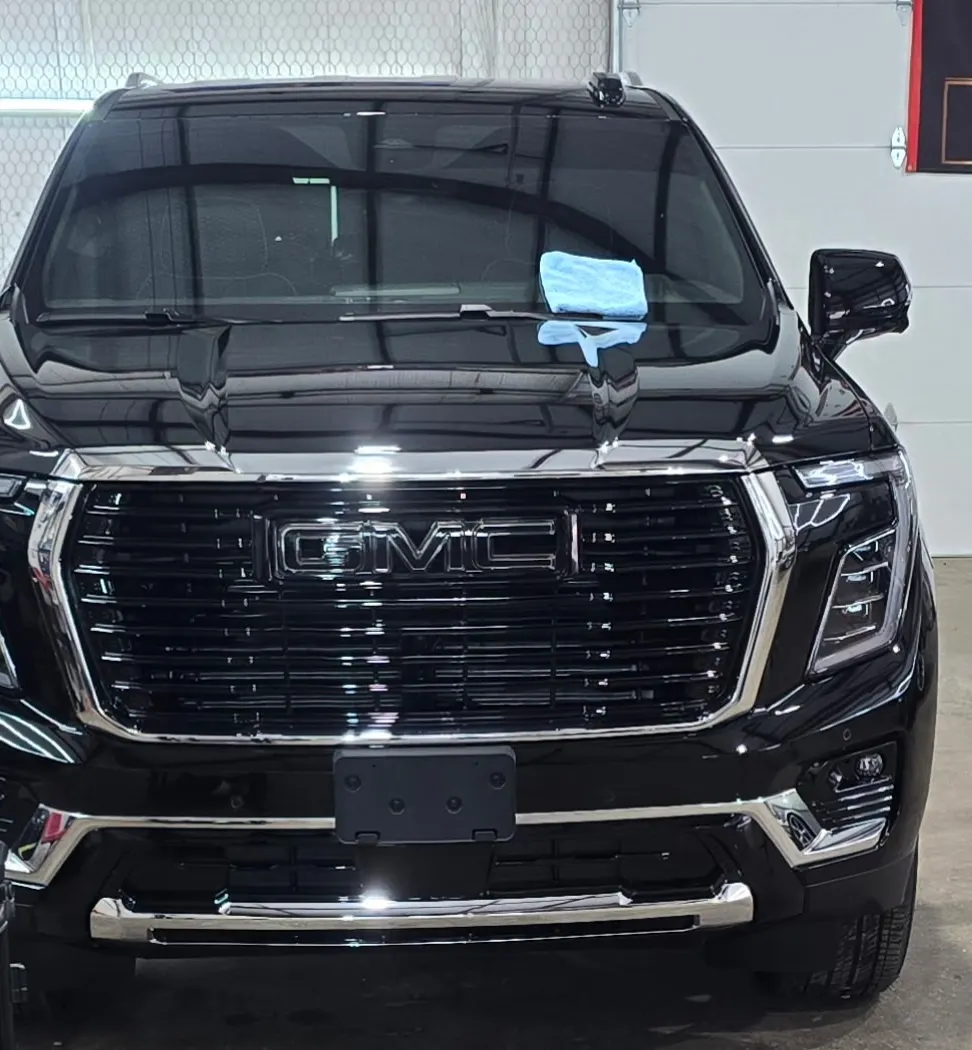
A foam bath to lift the grit before anything touches the paint, a chenille hand wash, iron decontamination and clay to pull out what the soap left behind, then polish and protection. It is the slow way, and it is why the paint still looks right two years later.
The bay is in Odessa, and we take work from Odessa,
Midland and across the Permian Basin. Foam bath, chenille hand wash, iron decon, clay bar and machine polish. The full hand finished routine.
Quoted after we see the vehicle
Never off a package name
01 / 04
Why the tunnel wash is the problem
The swirl pattern on most vehicles on the road did not come from driving them. It came from washing them: spinning brushes that carry the last hundred cars' grit into your clear coat, and dirty wash mitts dragged across a panel that was never rinsed properly first.
The whole point of the foam stage is that it lifts and floats grit off the surface before anything physical touches it. What touches it after that is clean chenille, and the wheels and fender wells get done separately so brake dust and road grime never ride up onto the paint.
Hand wash
Clay
Polish
Wax
02 / 04
Decontamination is the step people skip
Run your hand over a 'clean' panel and it feels gritty. That is bonded contamination (iron particles from brakes and rail dust, tar, overspray, tree sap), and no amount of soap removes it. Iron decon dissolves the metallic part chemically, and clay pulls the rest off mechanically.
Skipping it is why a wax applied over a washed car stops beading in three weeks, and why a polish on an uncontaminated panel drags contamination across the paint and puts new scratches in while it works. Decon is not an upsell stage, it is the stage that makes the ones after it worth doing.
03 / 04
Then polish, then protect
Depending on what the paint needs and what package you are in, that is a one to three step machine polish. After it, protection: a ceramic spray for a few months of easy washing, a paste wax or sealant for depth on a show weekend, or a full coating if you want it to last years.
Trim, glass and tire dressing finish it. The whole routine is priced as packages; see the pricing page for what each one includes and where it starts.
04 / 04
Is it worth it on a work truck?
More than on a garage queen, honestly. A truck that lives outside in this climate is under constant UV, and caliche dust is abrasive: every dry wipe with a shop rag is putting scratches in the clear. A truck washed properly on a schedule holds its finish and its resale value; one washed badly and often is being sanded a little at a time.
Nothing spins and nothing touches the paint until the grit has been foamed off it. The automatic wash is faster and cheaper and it is also the single biggest source of swirls in the clear coat on most vehicles.
How often should I have it done?
It depends where the vehicle sleeps and what it does. A truck parked outside on a job site wants it far more often than a garaged commuter. Once the paint is protected (sealed, waxed or coated), the intervals stretch out considerably.
Do you clean engine bays?
Yes. Engine bay degrease and rinse is in the mid packages and a full engine bay detail is in the higher ones. See the pricing page for which package carries which.
Do you do the fender wells and wheels too?
Every package includes the fender well flush, rims and wheels. Tire dressing comes in from the second package up. They are done separately from the paint on purpose, so the dirtiest parts of the vehicle never contaminate the wash used on the panels.